The basic idea
AI Voice Explained: How Synthetic Speech Works
AI voice is technology that turns written language into spoken audio using machine learning. It can model pronunciation, timing, emphasis, and vocal character without requiring a microphone recording for every line.
Continue exploring
A simple definition
These related guides show how the concept connects to practical tools, examples, and everyday questions.
The mechanism
How the system turns text into speech
Most AI voice systems follow a sequence that connects language understanding with audio generation.
-
1
Interpret the script
The system reads the words as language rather than treating them as a flat string. It estimates sentence structure, punctuation, pronunciation, and the intended relationship between words.
-
2
Plan the delivery
A speech model maps the script to timing, pauses, pitch movement, emphasis, and other vocal properties. This planning stage helps the result sound more like connected speech than isolated words.
-
3
Generate the audio
The model produces an audio waveform that represents the planned delivery. The output can then be reviewed, adjusted, and placed into a video, lesson, prototype, or other project.
A practical picture
The change from script to sound
The transformation is easier to understand when the input and output are considered as two different creative materials.
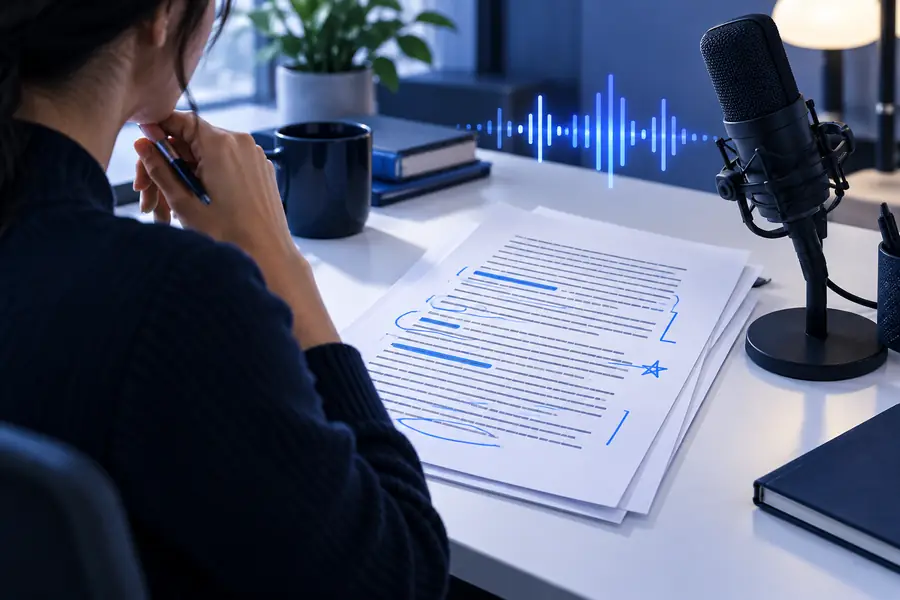 Written script
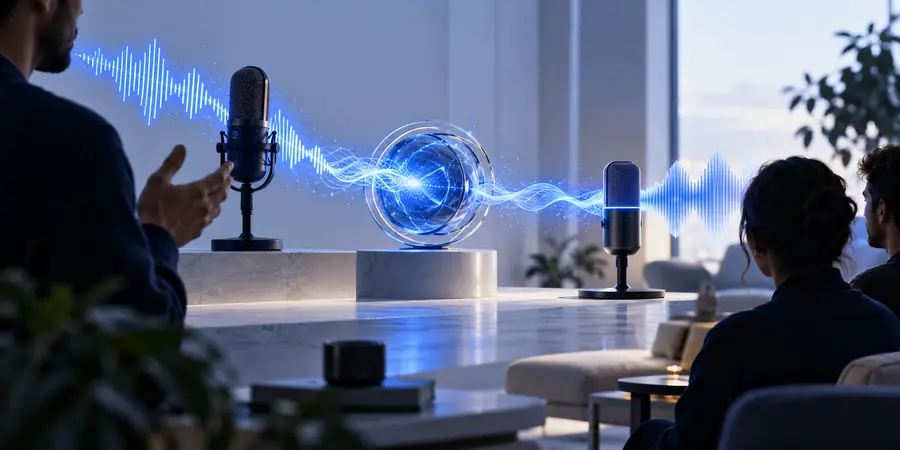 Spoken output
Limits and edges
Where the boundaries matter
AI voice is useful because it reduces the distance between an idea and an audio draft, but it is not identical to a human performance or a complete production workflow.
- AI voice
- Human recording
Starting material
AI voice
Usually begins with written text and selected delivery instructions.
Human recording
Begins with a person interpreting a script through live performance.
Repeatability
AI voice
Can reproduce a similar delivery across revisions when the same settings and inputs are used.
Human recording
Requires careful direction and retakes to reproduce an identical performance.
Emotional nuance
AI voice
Can express modeled emphasis and tone, but subtle context may require review and editing.
Human recording
Can respond spontaneously to direction, context, and another performer.
Editing changes
AI voice
Text revisions can create a new take without scheduling another recording session.
Human recording
Changed wording generally means recording the affected passage again.
Room sound
AI voice
Normally does not capture a physical room unless production adds one later.
Human recording
Naturally includes microphone choice, room acoustics, and recording conditions.
Responsible use
AI voice
Needs clear permission and careful disclosure when a recognizable or sensitive voice is involved.
Human recording
Also requires consent, especially when recording, publishing, or impersonating a person.
Next step
Turn a written idea into a voice draft
Once the basic mechanism is clear, the most useful test is a small, specific script. Try a short introduction, explanation, or narration and judge the result for clarity, pacing, pronunciation, and fit with the intended audience. Keep a person in the review loop when tone, identity, or sensitive subject matter matters.
Try voice AI- Start with a script that has a clear purpose
- Review pronunciation and emphasis before sharing
- Use consent and disclosure for recognizable voices
Common questions
Frequently asked questions
AI voice is generated speech created by a machine-learning system from written language or other instructions. The system predicts how the words could be pronounced and delivered, then produces an audio waveform that represents that performance.
A system first analyzes the script for language, pronunciation, and structure. It then plans characteristics such as timing, pauses, pitch, and emphasis before generating the final audio.
Text-to-speech is a broad term for converting written text into spoken audio, while AI voice often emphasizes modern learned models and more expressive delivery. The terms can overlap, but the quality and controls depend on the specific system.
Some generated voices can sound natural because they model patterns found in human speech. A recognizable person's voice should only be created or used with appropriate permission, and published content may need clear disclosure.
Generated speech can mispronounce names, misread context, or deliver emotion differently from what a human producer intended. It also does not remove the need for script editing, listening checks, consent, and responsible publication.