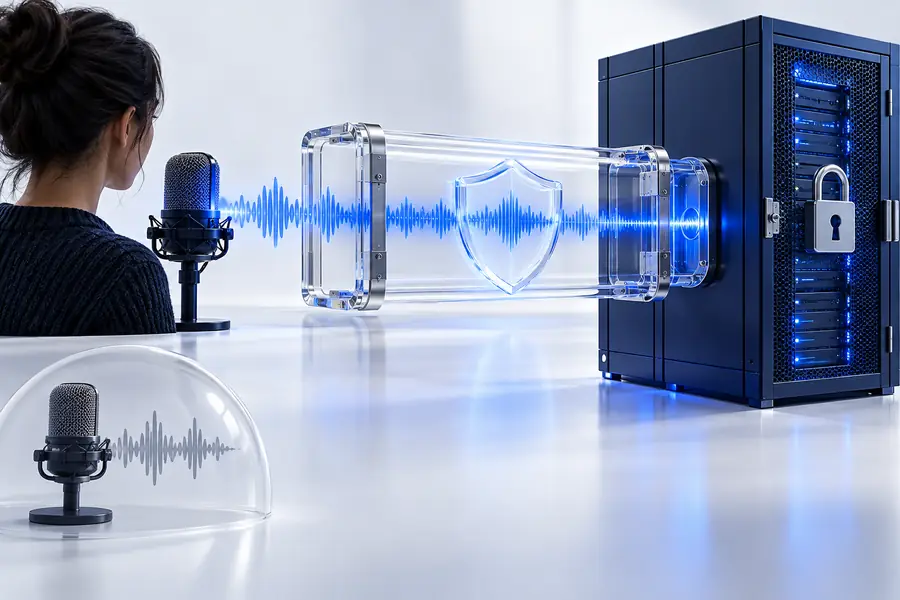
Is voice ai safe to use? It can be appropriate when you understand what happens to your audio, obtain permission, and review every result before sharing or publishing it.
A creator records and edits a short project from a phone while moving between locations.
The creator checks permissions and avoids unnecessary personal audio before using a mobile workflow. The voice ai for iphone guide covers the setup context.
A safe workflow does not require perfect certainty. It requires clear permission, sensible input choices, attention to provider information, and a person who approves the final result before it is used.
These answers focus on the practical questions people ask before trusting generated or transformed speech.
It can be, when the project uses permitted material, avoids unnecessary sensitive information, and includes human review. Safety depends on the workflow and the provider’s handling of inputs, not only on the generated audio.
You should not assume that finding or possessing a recording grants permission to imitate that person. Obtain appropriate consent or use a voice that is explicitly cleared for your intended purpose.
Only upload audio when it is necessary and you understand the relevant handling information provided by the service. Remove unnecessary personal details and avoid submitting confidential material when you cannot verify how it is stored or processed.
Yes, depending on the context and how the audio is presented. Review the result for misleading implications and consider clear disclosure when listeners could reasonably believe the speech is an authentic recording or personal statement.
Listen to the complete result, check names and claims, and compare the delivery with the intended meaning. A responsible reviewer should approve the final file before it is published, sent to customers, or used to represent a person.